Knitwear 101: A Beginner's Guide to Yarn Weights and Gauges
A jumper knit in fine merino and one knit in chunky lambswool can share the same shape on a pattern page and still behave like two different garments. One skims the body and slips under a coat. The other sits away from the skin, holds its own shape in the air and announces itself from across the room. Neither is better. But knowing which one you are making before you cast on is usually the difference between a favourite knit and a wardrobe orphan.
Yarn weight is about thickness, not heaviness
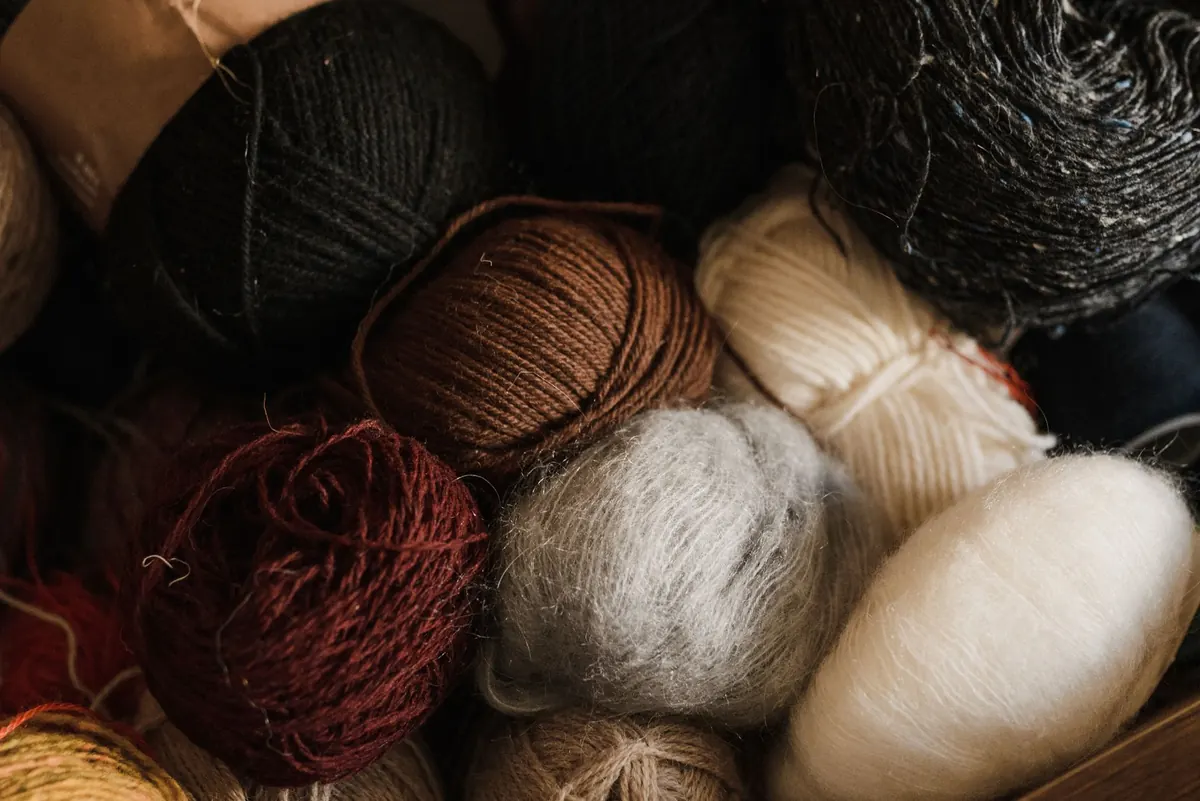
The word "weight" trips people up. It has nothing to do with how heavy the ball feels in your hand. A 50g ball of lace yarn and a 50g ball of chunky yarn weigh exactly the same; the chunky one simply contains far less length of yarn. Weight, in knitting language, means the thickness of the strand.
Two decisions set everything that follows: how thick that strand is, and how big your needles are. Together they produce gauge, the density of the fabric you are knitting. Gauge then decides drape, warmth, fit, how much yarn the project eats, and whether you finish it this month or next winter. Nothing else in knitting has that much leverage.
The three families, from fine to chunky
Labels throw a lot of names at you — lace, sock, fingering, sport, DK, worsted, aran, bulky, super bulky. Ignore the marketing and sort them into three practical groups.
Fine knits
Lace, sock, fingering and sometimes sport. These are thin yarns knit on thin needles, producing somewhere in the region of 25 to 32 stitches per 10cm. The fabric is smooth, light and good at holding detail: neat ribs, delicate lace, fine stripes. Fine-gauge tops layer beautifully and feel dressy rather than cosy. The trade-off is time. A fine jumper is thousands of stitches, though it is also the most portable knitting you will ever carry.
Medium knits
DK, worsted and aran. This is the sweet spot most patterns are written for, roughly 18 to 24 stitches per 10cm. Medium yarn is structured enough to show cables and texture, soft enough to drape, and quick enough that a jumper is a realistic project rather than a life's work. If you are unsure what to buy for a first garment, buy here.
Chunky knits
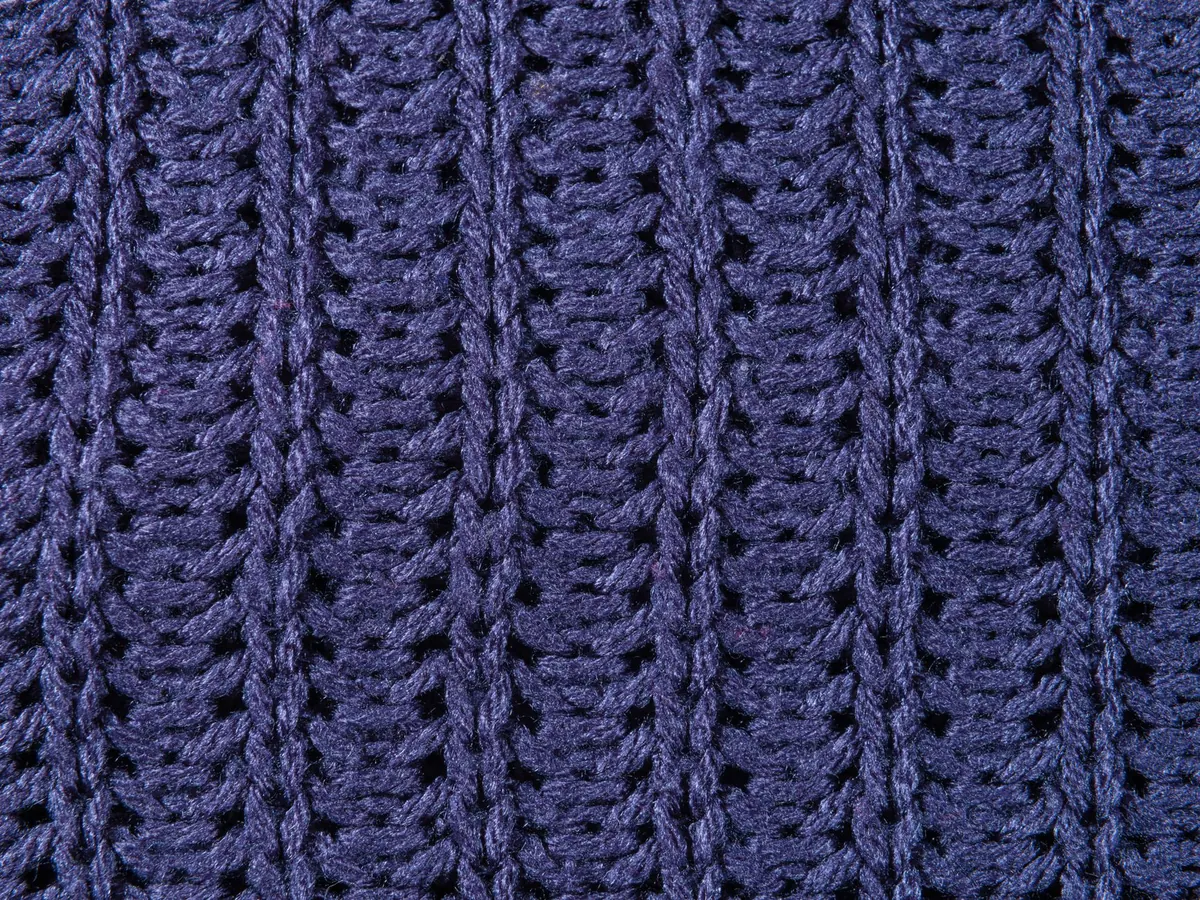
Bulky and super bulky, generally 6 to 15 stitches per 10cm. Fast, sculptural and warm, with the kind of stitch definition you can read from the other side of the room. Chunky fabric is also heavy, and a loose chunky knit will sag — necklines stretch, hems grow, elbows bag out. That can be a lovely effect or a sad one, depending entirely on how deliberately you choose it.
- Fine: roughly 25–32 stitches per 10cm — fluid, light, slow to knit
- Medium: roughly 18–24 stitches per 10cm — the everyday middle ground
- Chunky: roughly 6–15 stitches per 10cm — quick, dense, prone to stretching
Those ranges are guide rails, not rules. A thick DK and a thin worsted can knit up almost identically, which is why gauge matters more than the word on the band.
What gauge actually measures
Gauge is simply the number of stitches and rows in a set area of knitted fabric — usually 10cm, or 4in on American patterns. A pattern might say "18 stitches and 24 rows to 10cm in stocking stitch". That is not a suggestion; it is the measurement the whole garment was designed around.
The maths is unforgiving. If a pattern wants 18 stitches per 10cm and you are getting 16, you are knitting about 11 per cent wider than intended, and a 100cm sweater body will come out closer to 112cm. Match the stitch count and the sweater fits. Miss it and you have knitted a garment for somebody else.
How to measure a swatch without fooling yourself
- Knit a swatch at least 15cm square. Small swatches lie.
- Wash and dry it the way you will wash the finished garment. Wool relaxes; cotton can shrink.
- Lay it flat and let it rest. Do not stretch it to be helpful.
- Measure in the middle, away from curling edges, and count between two pins rather than along the ruler's end.
- Measure in three places and take the average. If it is off, change needle size and start again.
Why the same yarn can drape two ways
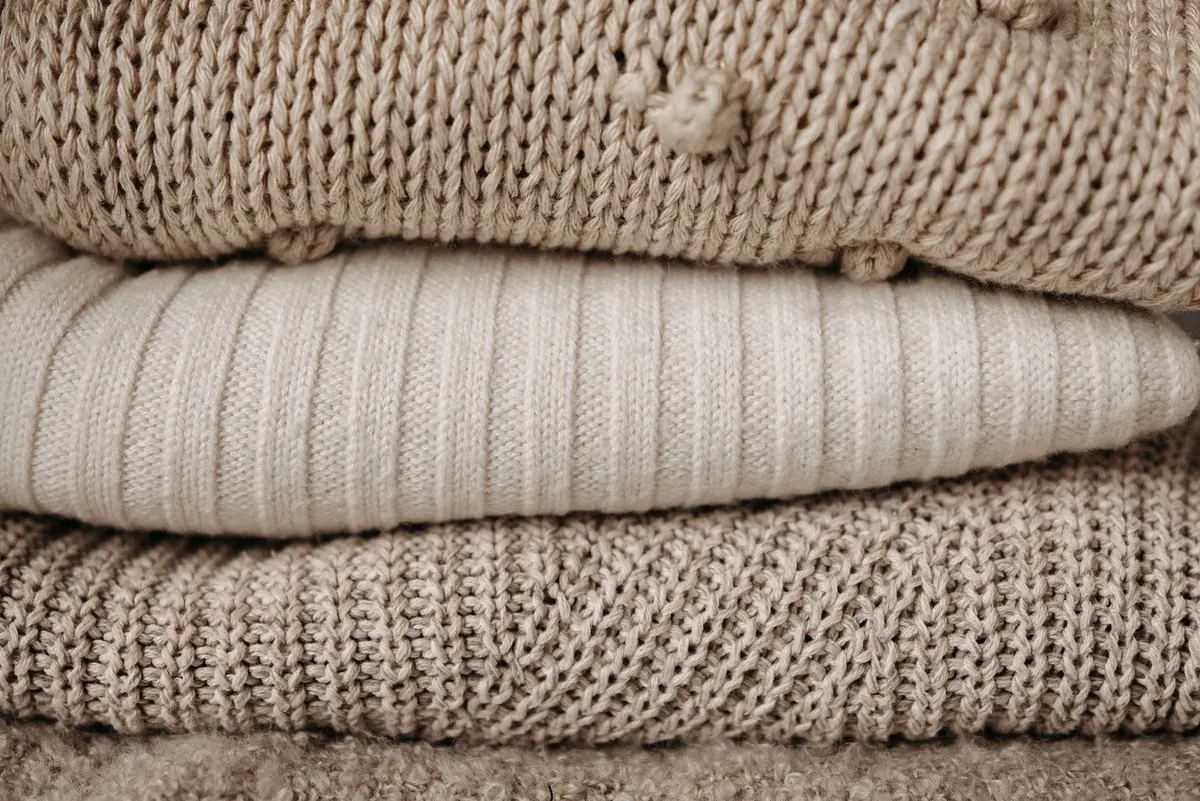
Drape is how a fabric falls: whether it hangs close and liquid, or stands away and holds a line. Knit the same yarn tightly and you get a firm, upright fabric that resists stretching and keeps its shape. Knit it loosely and you get something softer and more yielding, with more movement and more risk.
Fibre matters here too. Wool and alpaca have natural elasticity, so they spring back. Cotton and linen are heavier and have far less bounce, which means a loose cotton knit sags rather than swings. If you want a relaxed, drapey top in a plant fibre, go a little denser than you think you should.
Warmth is mostly trapped air
A knit keeps you warm because air sits still between the fibres and inside the fabric structure. Loosen the gauge and you trap more air, but you also let wind straight through. Tighten it and you get a denser, more wind-resistant fabric that feels cooler indoors.
So a fine-gauge wool jumper can be warmer than a loose chunky one on a windy walk, while the chunky knit wins on a still, cold day and wins again over a T-shirt at home. Think about where the garment will be worn. Under a coat, choose fine. As the outermost layer, choose chunky.
What to read on a yarn label
- Suggested gauge and needle size — the most useful numbers on the band
- Length per ball — two yarns of the same weight can differ a lot; you need the total length, not just the weight
- Fibre content — it predicts drape, warmth and how the knit will wash
- Care instructions — read them before you knit, not after
When substituting, match the gauge and the total length, not the weight name. A cotton DK can knit up like a worsted, and a fluffy alpaca can fill the space of a heavier yarn at a much lighter gauge.
Putting it to work
Start with a pattern that states its gauge clearly, then buy a yarn whose suggested gauge sits in the same range. Swatch before you commit, and adjust needle size until your stitch count matches. Row gauge matters less for simple shapes, but it matters a great deal for yokes, raglans and anything with a set-in sleeve, so check it too.
Keep your swatch, label it with the needle size, and pin it to the pattern. Next time you reach for that yarn, you will already know exactly how it behaves. That small habit turns guesswork into a wardrobe you can actually plan.
Photo: Arina Krasnikova / Pexels

You Might Also Like
A practical guide to the shoulder room, sleeve width and fabrics that let a winter coat sit comfortably over thick sweaters — and the fit checks worth doing before you buy.
Which knits to wear under a winter coat, in what order, and how thick each layer should be to stay warm without the padded look.