How to Choose a Winter Coat That Fits Over Chunky Knitwear
Every winter, the same scene plays out in fitting rooms: you pull on a coat you like, turn to the mirror, and watch the front gape over the cable knit you're wearing. The coat is your size. The sweater is your size. They simply refuse to cooperate.
The fix isn't to buy two sizes up and hope for the best, or to resign yourself to shivering in a thin merino all season. It's knowing which measurements create genuine room for knitwear, and which details quietly work against you. Get those two things right and layering stops being a compromise.
Start With the Sweater, Not the Size Tag
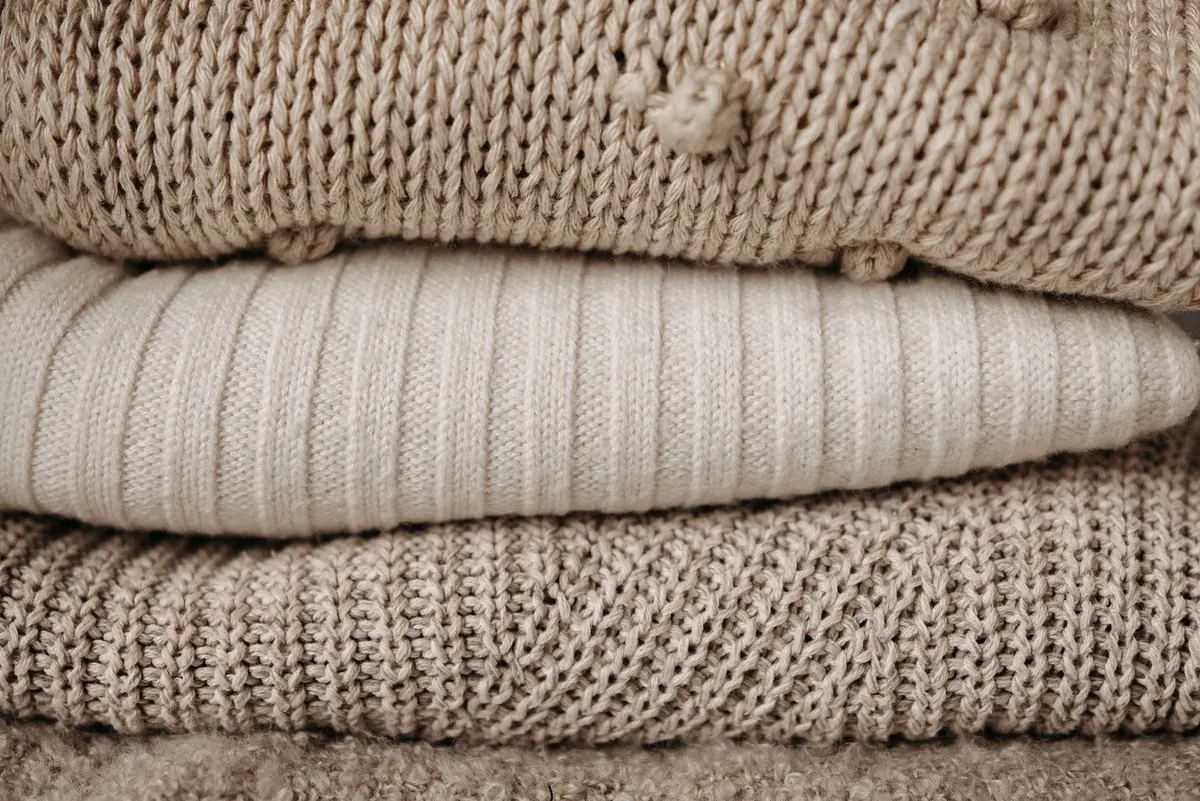
Wear your thickest sweater to the shop. Not a stand-in, not a light cardigan — the actual chunky aran or oversized lambswool you reach for in January. If you're shopping online, put it on before you measure yourself, because that's the version of you the coat has to fit.
Then think about what goes underneath the sweater. A cotton tee adds almost nothing. A shirt with a collar adds bulk at the neck and across the shoulders. Wear your real winter combination when you try coats on, and try several — two coats with identical chest measurements can behave completely differently once a bulky knit is in play.
Shoulder Room Is Where Coats Fail
Shoulders are the hardest part of a coat to alter and the first place knitwear causes trouble. With a set-in sleeve, the shoulder seam should sit on or just past your natural shoulder bone — roughly a finger's width beyond it when you're layering. If the seam bites into the top of your arm, the armhole is too small, and sizing up won't fix that elegantly. It will just make the coat longer and boxier.
Raglan sleeves, with their diagonal seam running from collar to underarm, are generous through the chest and shoulder and forgive bulk better than almost any other cut. Drop-shoulder coats are similarly relaxed, though they read as deliberately oversized. That's either the point or a problem, depending on what you're after.
Sleeve Width and Armhole Depth
This is where chunky knitwear gets squeezed. A coat sleeve needs to slide over a ribbed sweater cuff without dragging it up your forearm, which means the sleeve opening must be wider than the knit underneath — not just wider than your bare wrist.
Armhole depth matters just as much. Too shallow and you'll feel pressure under the arm the moment you reach for anything. Test it in the mirror:
- Hug yourself. If the coat pulls tight across the back or lifts the sweater's sleeves, the armhole is too high or the chest too narrow.
- Reach forward as if holding a steering wheel. The sweater shouldn't bunch uncomfortably under your arm.
- Raise both arms overhead. Some lift at the hem is normal. The coat dragging your sweater up around your ribs is not.
Sleeve length should land at the wrist bone. Long enough to cover the sweater cuff, short enough that you're not pushing fabric out of the way to use your hands.
Fabric and Lining: What Lets a Coat Slide On
Some fabrics welcome a thick sweater; others fight it. Wool, wool blends with a little cashmere or polyamide, brushed melton, tweed, boiled wool and suede all have enough give and drape to accommodate bulk. Crisp, bonded, coated or heavily taped technical shells have almost no stretch, and they grip a knit rather than gliding over it.
Linings are the detail most people ignore. A smooth satin, viscose or acetate lining lets a sleeve travel freely. Brushed flannel or fleece linings feel cosy against a shirt and grab stubbornly against a chunky knit. On unlined coats, run your hand along the inside seams — thick, lumpy finishing adds pressure points over a sweater.
Down and quilted jackets deserve their own warning. Horizontal quilting adds bulk right across the chest, which is exactly where a knit already pushes. If you want a puffer for layering, look for one cut wide through the body with a deep armhole rather than simply a larger size.
Fit Checks to Do Before You Buy
- Fasten every button or zip while wearing the sweater, then sit down. If the front pulls into a V or an X, the coat is too narrow through the chest.
- Check the side view. Folds radiating from the shoulder or a horizontal pull across the back mean the coat is straining.
- Put your hands in the pockets with the coat closed. A bulky sweater plus a tight-waisted coat makes this awkward fast.
- Walk a few steps and let your arms swing. A stiff, narrow sleeve will push the whole coat up at the shoulders.
- Try the car test if you commute. Sit, reach for a seatbelt, turn to check a blind spot.
- Look at the back vent, if there is one. It should still open when you sit rather than pulling against your hips.
Size Up, Take It In, or Walk Away
Sizing up is the lazy fix, because it adds room everywhere — including the waist and shoulders — and often leaves you swimming in fabric. If one size up simply relaxes the fit without swamping you, take it. If you'd need two sizes up, the cut is wrong for layering and no tailor will thank you for trying.
Alterations have limits worth knowing. Sleeves can be shortened, waists taken in, hems raised. Shoulders and armholes are expensive and difficult to change, so treat them as fixed. The coat must fit at the shoulder and chest; everything below is negotiable.
A note on length and closures
If you wear tunic-length sweaters, either choose a coat that falls clearly below them or one that's deliberately cropped. A coat that ends exactly where a long sweater ends looks accidental. And check the neckline: storm flaps, high collars and zip guards can feel suffocating over a turtleneck. A two-way zip earns its keep on long coats, letting you open the hem when you sit.
Building a Coat Wardrobe That Layers Properly
You don't need many coats, but you do need one that's genuinely roomy. A raglan-sleeve wool coat or a relaxed parka with a deep armhole will carry you through most of winter over any sweater you own. Then keep a mid-weight coat for milder days and a clean, slimmer one for shirts and fine knits.
Once you find a coat that layers well, measure it flat — chest, shoulder, sleeve, length — and write the numbers down. Those measurements, not the label, are what you compare against when shopping online. Keep a soft tape measure in a drawer, check the size chart against your own numbers, and buy from shops with a straightforward returns policy so you can try the coat on at home with your heaviest knit underneath. That single habit saves more returns than any size guide.
Photo: levan simonshvili / Pexels

You Might Also Like
Which knits to wear under a winter coat, in what order, and how thick each layer should be to stay warm without the padded look.
Oversized and fitted cardigans solve different problems. Here's how each cut affects proportion, styling and shape — so you buy the one you'll actually wear.