How to Layer Knitwear Under a Winter Coat Without Bulk
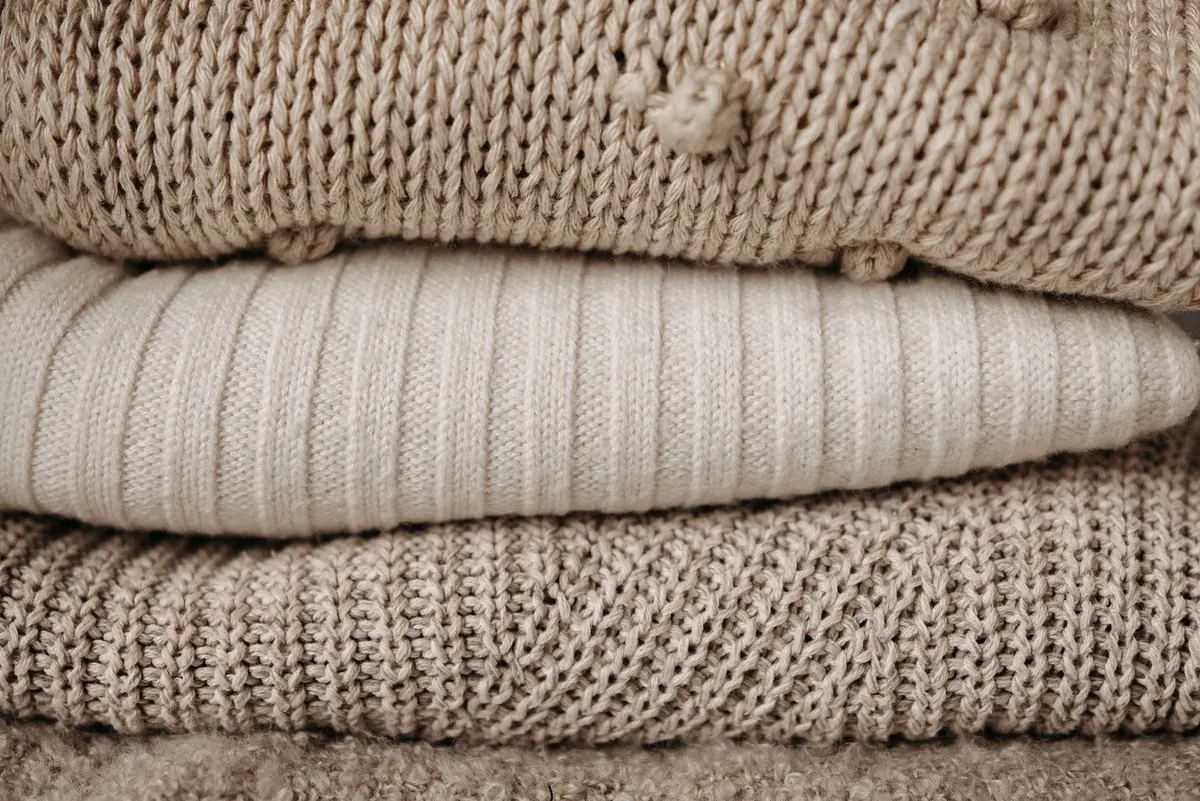
A good winter coat can only do so much. Most of the warmth you feel on a February walk comes from the air trapped between your layers, and the trick is building those layers without turning your silhouette into a duvet. Knitwear is the best material for the job: wool and wool blends hold warmth, breathe when you step onto a warm train, and sit flat against the body when you choose the right weight. The trouble is that most people layer by adding more rather than by adding smarter. Here is how to get the order and the thickness right.
Thin Against the Skin, Weight on the Outside
Think of your layers as a gradient, not a pile. The piece touching your skin should be the thinnest, smoothest knit you own — a fine merino crew, a silk-and-wool blend, a light cashmere long-sleeve. It sits flat, it moves moisture away from your body, and it doesn't bunch at the elbows when you bend your arms.
The middle layer can be a little thicker. The outer layer — whether that's a chunky sweater or the coat itself — should carry the visual and physical weight. If your thickest knit is the one against your skin, you've built the bulk in the wrong place: it will show through everything above it and leave you with nothing warmer to add.
One material note worth repeating: cotton next to the skin in cold weather is a bad choice. It absorbs moisture and holds it, and a damp cotton tee under a coat turns cold quickly. Wool, silk, or a technical blend will keep you far more comfortable.
How to Judge a Knit's Thickness Before You Buy It
Two words do most of the work here: gauge and ply. Gauge describes how tightly the yarn is knitted — a fine-gauge knit (12 to 14 gauge and up) behaves almost like a shirt, while a 5-gauge chunky sweater can be several times thicker. Ply describes how many strands are twisted into the yarn; a two-ply fine-gauge cashmere will beat a bulky acrylic for warmth per millimetre almost every time.
Rather than memorising numbers, use your hands:
- The pinch test. Fold the knit between finger and thumb. If you can still feel your fingertips clearly, it's a base layer. If the fabric feels solid and springy, it's a mid-layer.
- The shoulder test. Hold it against your shoulder in the mirror. If it visibly adds width there, it belongs on days you're not wearing a fitted coat.
- The sleeve test. Push your arm into a coat sleeve with the knit on. If you have to shove, the knit is too thick or too wide in the arm.
- The ribbing test. Thick ribbed cuffs and deep ribbed hems create ridges under a coat sleeve and hem. On inner layers, favour clean edges.
The Layering Order, Step by Step
- Base layer. A thin merino crew or silk blend, tucked in. A tucked base stops draughts at the waist and gives the layers above something smooth to sit on.
- Optional mid-layer. A fine-knit cashmere or lambswool crewneck, or a thin cardigan if you run cold. Cardigans are useful because you can unbutton one without removing anything.
- Insulating knit. This is where you add thickness — a mid-weight lambswool crew, or a chunky knit only if the coat has genuine room for it. The aim is two or three thin layers, not one enormous one.
- Coat. Close it. If it won't fasten comfortably over everything, you have one layer too many.
- Accessories, outside. Scarf, hat and gloves go over the coat collar, not stuffed down inside it.
If the coat won't close without stretching, the problem isn't the coat. It's the combination underneath.
Where Bulk Actually Comes From
Bulk is rarely about the torso. It's the shoulders, the underarms, the neck and the wrists — four places where extra fabric has nowhere to go.
At the shoulders, a dropped-shoulder knit adds width fast. Under a structured coat, choose raglan or set-in sleeves instead; they follow the arm rather than hanging off it. At the underarms, a wide, boxy body plus a wide sleeve creates a fold of fabric exactly where you want none. At the neck, a bulky cowl under a coat collar can look like a second chin from behind — a crewneck or a slim mock neck is easier to wear. And at the wrist, three thick cuffs stacked together form a visible lump, so keep inner layers cuff-free or lightly ribbed.
If you're layering three pieces that are each a little too thick, swapping the middle one for a finer knit will do more for your silhouette than any change to the coat.
Match the Knit to the Coat
Puffer or quilted coat
The coat already supplies the loft, so keep it simple: a thin merino base and a light cashmere crew is plenty. Anything heavier and you'll be unzipping within ten minutes of getting on a bus.
Wool overcoat
The coat provides structure but less insulation. This is where a mid-weight lambswool crewneck or a fine cable knit earns its place. Avoid chunky aran under a tailored coat — it will pull the shoulders out of line.
Parka or shearling
Roomy but heavy, and often worn in wet weather. Go thin and single: one good fine-gauge knit, and a scarf you can remove. You want the option of shedding warmth without removing the coat.
Unlined wool or trench
The most demanding combination. Use a base layer, a mid-layer, and a knit with a high or doubled neck. Wind finds every gap in a coat without a lining.
Small Adjustments That Kill the Padded Look
- Tuck the base layer fully, and tuck or half-tuck the middle layer. A long tunic hem sitting under a hip-length coat breaks the line at the widest point.
- Keep knit and coat in a similar depth of colour if you want a longer, leaner line.
- Push sleeves up slightly rather than rolling a cuff over another cuff.
- Belt the coat, not the layers underneath.
- Choose fine wool over bulky acrylic where you can — you get more warmth for less fabric.
A Five-Minute Check Before You Leave
Raise both arms above your head, then lower them. If the sweater rides up your back, it's too wide or too short to sit under that coat. Sit down and cross your arms; if you feel a squeeze at the armpits, swap the middle layer for something finer. Fasten the coat completely and turn to the side in the mirror — the front should lie flat, not bow out.
Then walk to the door and step outside for a minute. If cold reaches your chest quickly, don't add a fourth layer. Replace one of the layers you're wearing with something warmer and thinner. That single swap is usually the difference between a coat that works and a coat you resent. And if you feel persistently cold even when you're sensibly layered and dry, it's worth mentioning to a doctor rather than simply buying a thicker sweater.
Photo: Mustafa Çimen / Pexels

You Might Also Like
A practical guide to the shoulder room, sleeve width and fabrics that let a winter coat sit comfortably over thick sweaters — and the fit checks worth doing before you buy.
Oversized and fitted cardigans solve different problems. Here's how each cut affects proportion, styling and shape — so you buy the one you'll actually wear.