How to Layer Knit Tops for Fall: 7 Outfit Formulas That Work
Fall layering has less to do with owning more knitwear than with knowing which pieces sit happily on top of each other. A fine merino crewneck behaves nothing like a chunky cable knit, and the same cotton shirt can look sharp under one and lumpy under the other. The seven combinations below are formulas, not rules. Each names a knit, the layer that goes with it, and the bottom half that keeps the proportions right. Pick the one that suits your weather and your closet, then adjust the colors to suit you.
Start With the Knit, Not the Outfit
Most layering failures come from putting two thick pieces together and hoping a mirror will forgive it. Build outward from your thinnest knit instead, adding weight one layer at a time.
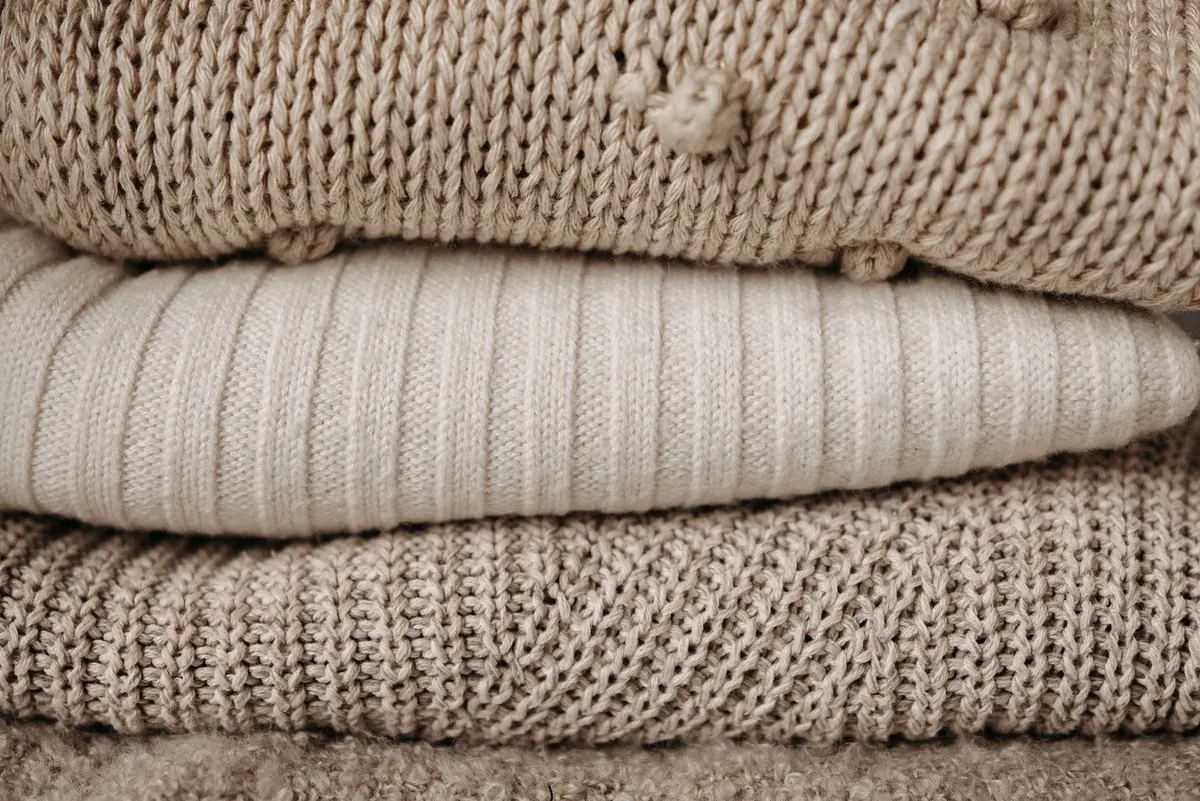
- Weight order matters. Fine-gauge merino, cotton-silk and lightweight cashmere blends belong against your body. Ribbed knits and fine lambswool sit in the middle. Chunky cables, alpaca and brushed mohair go on top, where their bulk can be seen rather than squeezed.
- Necklines decide the layer above. A crew neck disappears under a collared shirt; a V-neck leaves room for collar points. A turtleneck replaces a scarf, so it needs to sit flat enough to go under a jacket.
- Sleeves set the rules. Slim set-in sleeves slide under blazers and coats. Drop shoulders and dolman sleeves need a wide armhole above them, or they should be the outermost layer.
- Two neutrals and one accent is the easiest color formula to repeat: oatmeal knit, navy trousers, rust scarf. Or charcoal sweater, cream skirt, deep green bag.
7 Formulas You Can Copy Tomorrow
1. The open-shirt sandwich
Wear a thin ribbed knit as your base, then add an oversized poplin or flannel shirt, left open. Half-tuck both into straight-leg jeans or tailored trousers and finish with a trench or wool coat. Keep the knit close to the body and the shirt roomy; that contrast is what stops the outfit reading as two shirts fighting. When the temperature drops, swap the poplin for a quilted overshirt or a flannel shirt jacket.
2. Turtleneck under a structured jacket
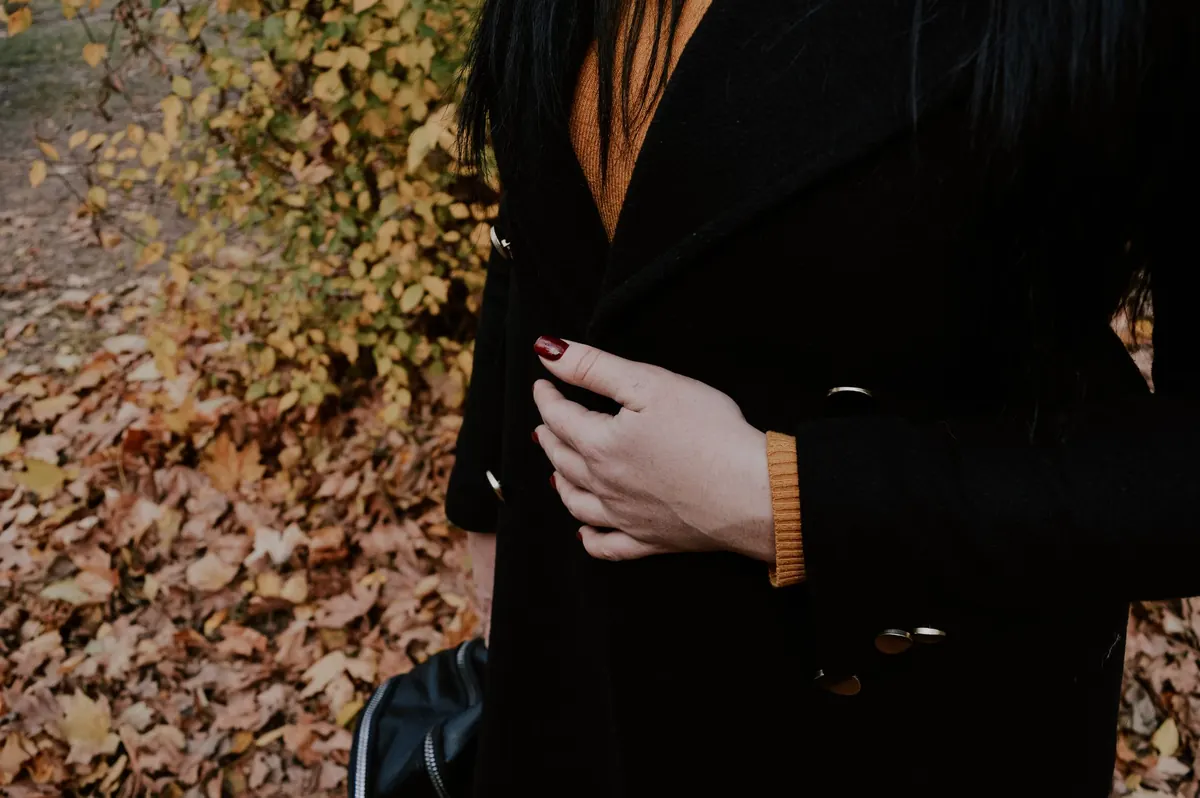
A fine turtleneck, a blazer or wool bomber that can close without straining, and a midi skirt or dark denim below. Button the jacket, or leave it open with a belt to mark your waist. This is the formula to reach for when you want to look pulled together with almost no effort. Skip cabled or oversized turtlenecks here; the jacket will bunch at the shoulders and gap at the buttons.
3. Chunky sweater over a collared shirt
The classic school-uniform move, grown up. Start with a crisp cotton shirt — thin rather than heavy oxford — then pull a crew or V-neck sweater over it so the collar points and cuffs show. Add straight-leg jeans, a pleated midi skirt or wool trousers. One detail lifts the whole thing: roll the shirt cuffs twice so they sit deliberately above the sweater sleeve instead of vanishing inside it.
4. Knit vest over a long-sleeve tee
The vest may be the most useful piece of fall knitwear you own. Wear it over a fitted long-sleeve tee, a thin turtleneck or a shirt, then choose a slip skirt, wide-leg trousers or a midi dress beneath. It warms your core without adding sleeve bulk, which makes it ideal for days that start cold and end mild. Choose a vest long enough to cover your waistband, or a cropped one over high-waisted bottoms so nothing shows between the two.
5. Cropped knit, high-waisted everything
Pair a cropped sweater or cardigan with high-waisted trousers, a pleated skirt or high-waisted jeans so the hem meets the waistband with no gap. Add a belt for polish. If you would rather not show your midriff, layer a longer fitted tee underneath and let it peek below the cropped hem on purpose. The proportion still works and the extra coverage feels less fussy than tugging at a short knit all day.
6. Cardigan as the top, belted
Button a fine or medium-weight cardigan and treat it as a top, not as outerwear. Belt it at your natural waist over a slip skirt, a simple midi dress or straight-leg trousers. Look for a smooth knit and buttons that don't pull apart when closed; ribbed styles with a little stretch usually behave best. A leather or woven belt does the styling work here, turning an open layer into a defined silhouette.
7. Sweater over a slip dress
A slip dress doesn't have to end with summer. Pull a fine-knit crew neck or turtleneck over the top and let the silk or satin hem show below the knit. If the dress is thin and the sweater is lightweight, the reverse works too: slip the dress over a fitted turtleneck. Either way, pick a sweater that ends at your hip or waist, add opaque tights and boots, and keep jewelry minimal so the texture contrast does the talking.
Proportion, Color, and Texture
Once the layers are on, three things decide whether the outfit reads as intentional.
Proportion. One bulky piece per outfit is usually enough. If the sweater is oversized, keep the bottom slim or tuck the front. If the skirt is full, keep the knit fitted. A defined waist — a belt, a tuck, a cardigan buttoned to the middle — gives the eye somewhere to rest.
Color. Keep the knit and the bottom in the same family, such as cream with camel or grey with navy, and let the middle layer or an accessory carry the contrast. Three unrelated brights at once nearly always look accidental.
Texture. Mix smooth with nubby: satin with rib, poplin with cable. Two chunky textures can work, but only when the colors are close enough that the eye reads one shape instead of two competing ones.
Quick Fit Checks Before You Walk Out the Door
- Raise both arms. If the shirt under your sweater rides up to your ribs and stays there, the knit is too tight through the body.
- Button the outer layer. If it pulls at the chest or the armholes dig in, remove the middle layer or choose a thinner knit.
- Check the mirror in daylight. Similar mid-tones can look muddy indoors. Outdoors, can you see two or three distinct layers?
- Look at your cuffs and collar. Anything meant to show should show by a visible margin, not a millimetre.
- Sit down. Waistbands, belted cardigans and tucked knits behave differently seated. If it's uncomfortable now, untuck or loosen before you leave.
Adjusting These Formulas for Real Weather
Layering is a temperature system, not a fixed look. On mild days, formulas four and six work on their own over just a tee or a thin knit. For genuinely cold mornings, add a thermal base under the knit, swap the blazer for a wool coat that closes over everything, and choose tights over bare legs. When you're in and out of overheated buildings all day, wear the lighter knit and carry the outer layer rather than committing to a heavy sweater you can't take off.
Start with one formula that matches what you already own. Wear it once, notice what annoyed you — a tight armhole, a hem that refused to stay tucked — and fix that single thing next time. Two or three rounds of that and you'll have a fall wardrobe that layers without you having to think about it.
Photo: Liudmyla Shalimova / Pexels

You Might Also Like
A practical guide to the shoulder room, sleeve width and fabrics that let a winter coat sit comfortably over thick sweaters — and the fit checks worth doing before you buy.
Which knits to wear under a winter coat, in what order, and how thick each layer should be to stay warm without the padded look.